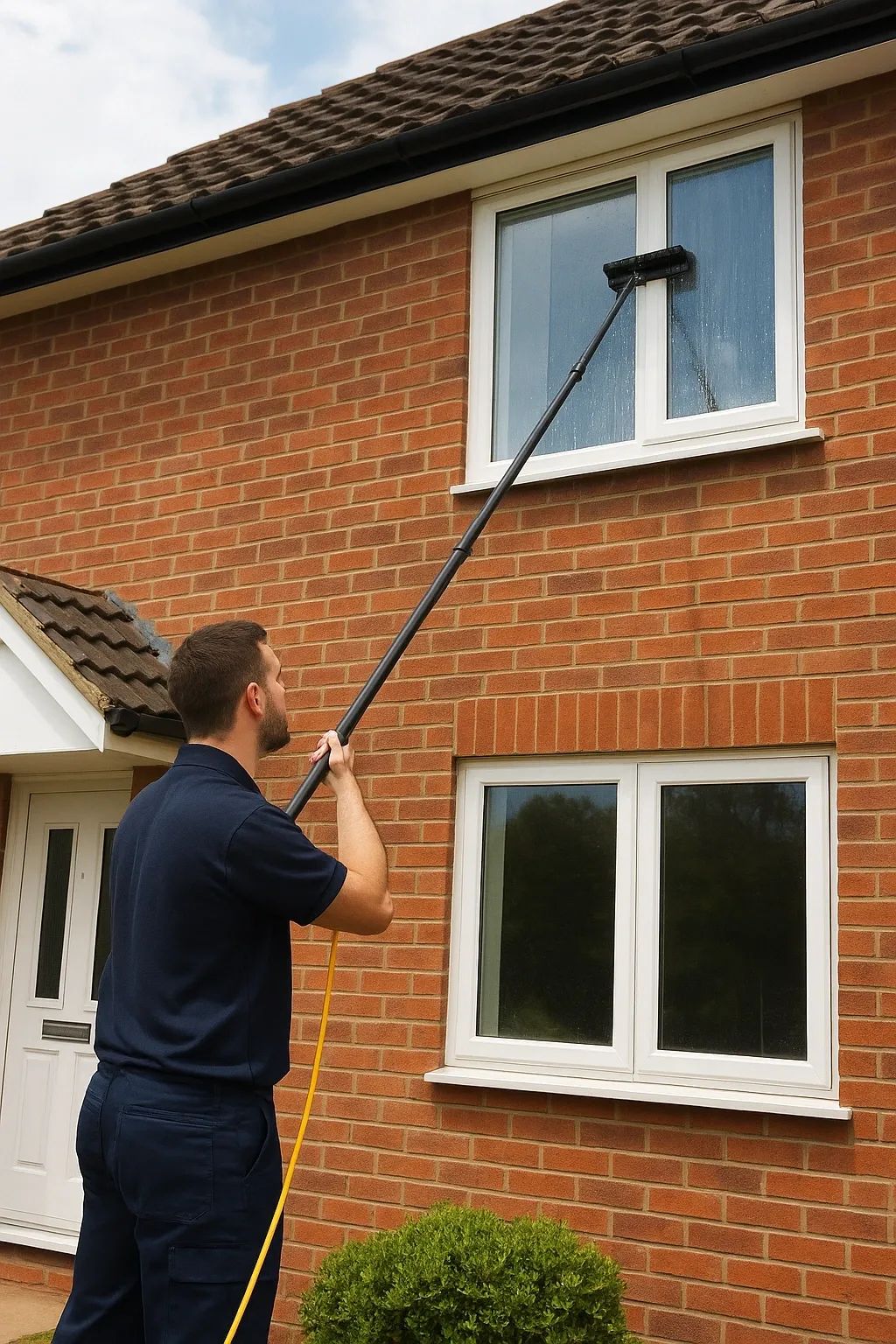
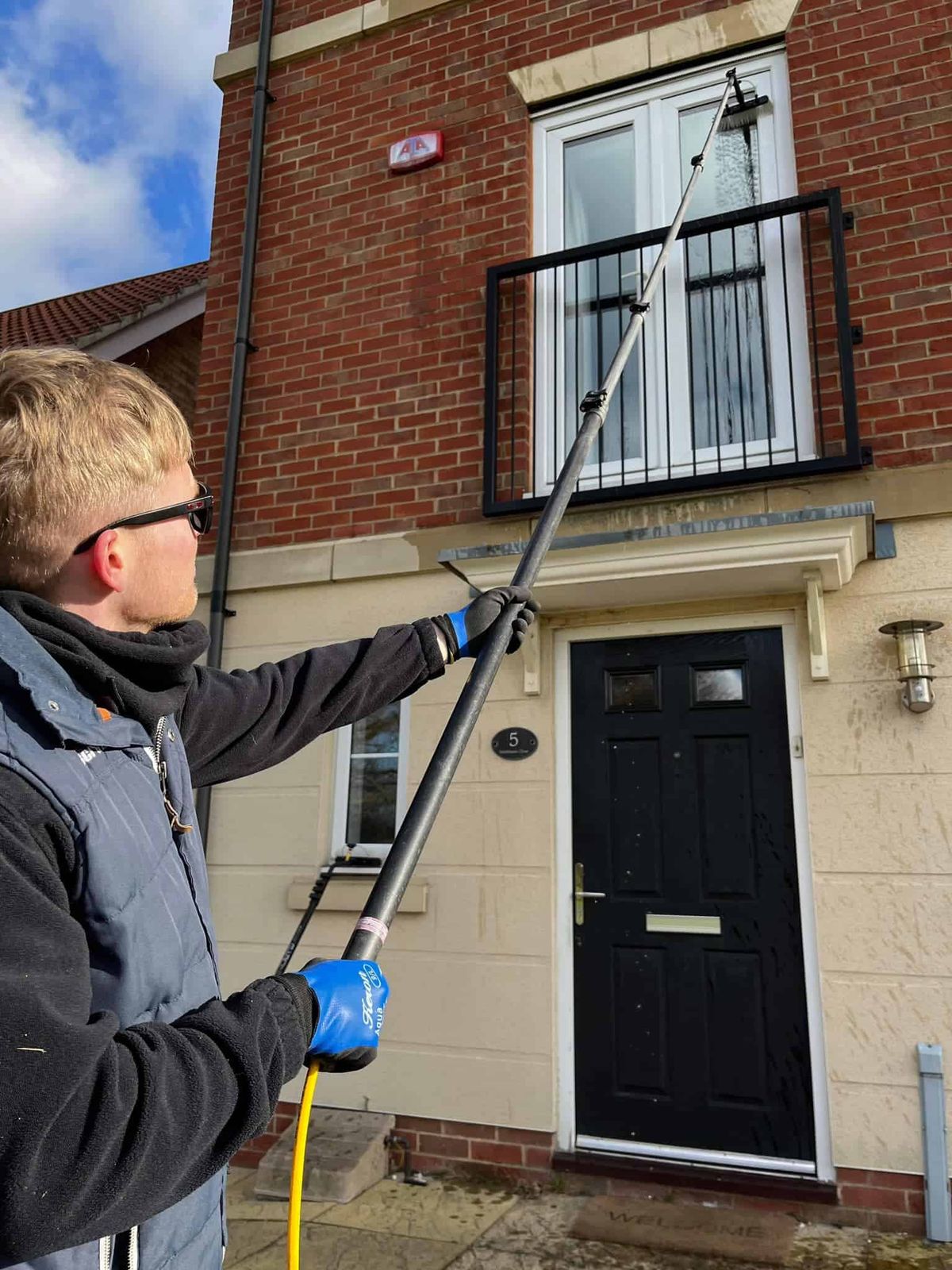
Published UK trade guides put most rounds at two to five times their monthly round value, and compact, well-priced four-weekly rounds at six to nine times, so a round billing £3,000 a month would typically be priced between £6,000 and £15,000, or £18,000 to £27,000 if it is tightly grouped. An owner-run window cleaning business usually sells for about one and a half to three times a year's adjusted profit, meaning profit with the owner's own pay and personal costs added back.
Window cleaning businesses for sale
This section is about window cleaning businesses, which are larger than a single round, usually with several vans, employed or subcontracted cleaners, a mix of domestic and commercial customers and an owner who runs the business more than cleans for it. Commercial window work for offices, shops, schools and blocks of flats is often on a written contract or a regular schedule, and buyers look at those contracts in the same way as any commercial cleaning contract, checking notice periods, change-of-control wording and whether any single client provides too large a share of the turnover.
A multi-van business carries wages, vans, insurance and management costs that a one-person round does not, so it is priced on profit rather than on monthly round value, in the same way as other cleaning companies, and an owner-run window cleaning business usually sells for roughly one and a half to three times a year's adjusted profit, meaning profit with the owner's own pay and personal costs added back. Applying a round's monthly-value figures to a business with staff would leave those costs out, so a buyer should always ask for the accounts and a breakdown of profit by van or team. Employed cleaners move to the buyer on their existing terms under TUPE in an asset sale, and our page on commercial cleaning businesses for sale covers contract checks in more detail.
How window cleaning rounds are priced
A round is priced on its monthly round value, meaning what the customers on the list pay in an average month for their regular cleans, multiplied by a figure that reflects how good the round is. On a four-weekly round there are thirteen cleans a year, so a round billing £2,770 for each full cycle has a monthly value of about £3,000, found by multiplying £2,770 by thirteen and dividing by twelve.
| Source | Year | Published range |
|---|
| Cleaning Matters | 2015 | 2 to 5 times monthly turnover, occasionally up to 10 times |
| Window Cleaning Warehouse | 2022 | 3 to 5 times monthly turnover, with compact, well-priced rounds at 6 to 9 times |
| Asking prices on the largest UK round marketplace | October 2026 | About 4.5 to 12 times the stated monthly round value (asking prices, not sale prices) |
In pounds, a round with a monthly value of £3,000 would be priced at roughly £6,000 to £15,000 on the wider published range, and at £18,000 to £27,000 if it is compact, well priced and cleaned every four weeks. Asking prices on listings reach higher than either published range at the top end, and a buyer should treat an asking price as the seller's opening figure in a negotiation. You can test a round's figures with our window round valuation guide.
Buying a window cleaning round: what to check
These are the checks a buyer should make on any round before agreeing a price, and a seller with a sound round will be glad to help with each one.
- The customer list. You should see a written list with every address, how often it is cleaned, the price per clean and roughly when each customer started, and you should add it up yourself to check it reaches the monthly value being claimed on the listing.
- The cycle. A round cleaned every four weeks gives the steadiest income and is the easiest to price, whereas a mix of six-weekly, eight-weekly and occasional customers is harder to build a full working week around and is usually priced lower.
- How customers pay. Customers who pay by card, direct debit or an app leave a record of every payment you can check against the list, while a cash round relies on the seller's word and tends to lose more customers when a stranger arrives to clean.
- Geography. Plot the addresses on a map before you agree a price, because a round of houses on the same few estates can be cleaned in far fewer hours than the same income spread across several villages.
- Price rises. Ask when prices last went up and how customers took it, since a round that has already absorbed a recent increase is easier to hold on to than one where the next rise has still to be put to customers.
- Attrition. Buyers commonly expect 5 to 10% of customers to drop off after a round changes hands, so it is sensible to agree the price with that loss in mind and to ask how many customers the seller has lost and gained over the past year.
A seller who can show you all of this on paper is offering a round you can price with some confidence.
Red flags when buying a window round
These are the signs a buyer should look out for when a round comes up for sale.
- A customer list that only exists in the seller's head or diary, or one that arrives late and does not match the monthly figure on the listing.
- A cash-only round with no bank record of payments, where you cannot check that the customers on the list are paying what the seller says they pay.
- One-off cleans, gutter clearing and conservatory roofs counted into the monthly value as if they were regular customers.
- Addresses spread so widely that travel would eat into each working day, or a round made up of pockets a long drive from where you live.
- Customers who are friends, neighbours or relatives of the seller and may stay loyal to the person rather than the round.
- Prices well below the local going rate, where customers who chose the round for its price may leave when a rise is put to them.
- A seller who will not agree to a trial period or to any part of the price being held back.
None of these rules a round out on its own, and some are simply reasons to offer a lower price, though a round showing several of them together usually needs more questions answered before any money changes hands.
How a round handover works
The seller usually introduces the buyer to customers in person, by a card or letter through the letterbox, or by message for customers who pay through an app, telling them who will be cleaning their windows from which date and that the price and frequency stay as they are. Most buyers then work a trial period alongside the seller, often for a full cycle or two, so they learn the route, the access arrangements, the gate codes and which customers like a knock when the cleaner arrives.
Some customers will drop off whatever both sides do, so it is common to hold back part of the price until the round has been running under the new owner for an agreed period. The written agreement should set out how much is held back, for how long, how lost customers are counted, and how the held-back amount is reduced if more customers leave than the 5 to 10% buyers usually expect, so that the buyer is protected without the seller being penalised for ordinary losses. The agreement should also include the seller's promise not to clean windows for customers on the list, or nearby, for an agreed time after the sale.
Most rounds are run by one person, though if the round comes with an employee, the rules on TUPE when selling a cleaning business may move that person across to you on their existing terms.
Joining our window cleaning buyer register
This section explains how to hear about window cleaning businesses and rounds as they come in. Join our buyer register with the areas you would consider, the size of business or round you are looking for and how you plan to fund it, and we will send you the ones that match, often before they are advertised. Registering is free, and we ask buyers to sign our confidentiality agreement before we share a business's name or customer list. If you own a window cleaning company and are thinking of selling, our guide to selling a window cleaning business explains how we value and market it.
Questions buyers ask
How much does a window cleaning round cost to buy?
UK trade guides (Cleaning Matters 2015, Window Cleaning Warehouse 2022) put most rounds at two to five times their monthly round value, with compact, well-priced four-weekly rounds reaching six to nine times. A round taking £2,000 a month would usually cost somewhere between £4,000 and £10,000, and more if it is tightly grouped and paid by card or direct debit. Asking prices on listings are often higher than the price a round finally sells for.
How many customers will I lose after buying a round?
Buyers commonly expect 5 to 10% of customers to drop off after a round changes hands. Cash rounds and rounds built on the seller's personal friendships tend to lose more, while card and direct debit customers on a regular cycle tend to stay. Holding back part of the price until the round has settled protects you against losses beyond that.
Should I pay for a window round all at once?
It is safer not to, and most fair sales hold back part of the price until the round has run under the new owner for an agreed period. The held-back amount is then paid in full or reduced according to how many customers have stayed. Agree the rules in writing before you pay anything.
What is monthly round value?
Monthly round value is what the customers on the list pay in an average month for their regular cleans. For a four-weekly round, add up one full cycle, multiply by thirteen and divide by twelve, since there are thirteen four-weekly cycles in a year. One-off jobs should be left out of the figure.
Can I buy a round if I have never cleaned windows?
Yes, many rounds are bought by people new to the trade, though a longer trial period alongside the seller is sensible so you learn the route and the customers before working it alone. You will need your own equipment and public liability insurance in place before the handover date. A seller who agrees to stay available by phone for the first few weeks makes the start much easier.