A small owner-run cleaning company for sale usually changes hands for roughly 1.5 to 3 times a year's adjusted profit, meaning profit with the owner's own pay and personal costs added back, while window rounds are priced on monthly turnover instead. There were 78,915 businesses in the UK cleaning, hygiene and waste industry in 2025, so new ones reach the market every month and buyers on our register hear about them first.
Cleaning businesses we sell by trade
This table shows the kinds of cleaning business we sell, what a buyer is actually taking on in each, and the basis the asking price is usually set on.
| Trade | What you are buying | Usual pricing basis |
|---|
| Commercial and office cleaning | Contracts with offices, schools and other sites, the cleaners on them, and usually a supervisor | A year's profit, adjusted for the owner's pay |
| Domestic cleaning agencies | Regular weekly or fortnightly household clients, the cleaners and the booking system | A year's profit, adjusted for the owner's pay |
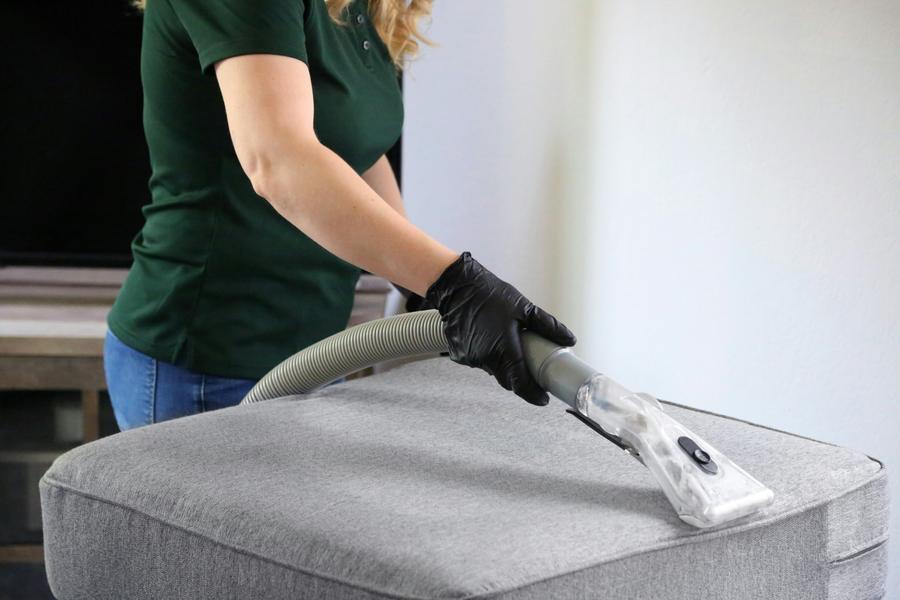
| Carpet and upholstery cleaning | Vans and machines, repeat customers, landlord accounts and online reviews | A year's profit, with the equipment included or valued alongside it |
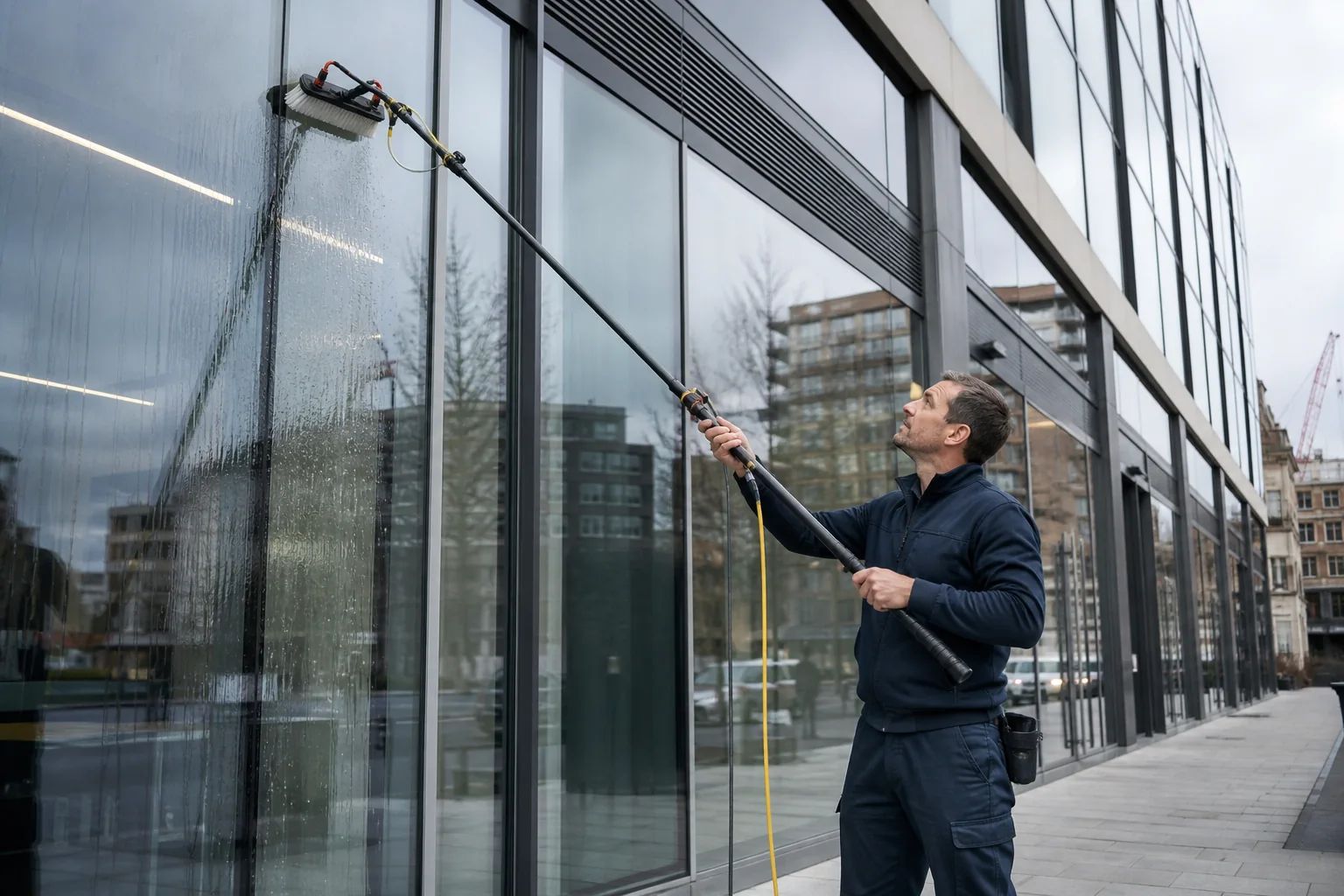
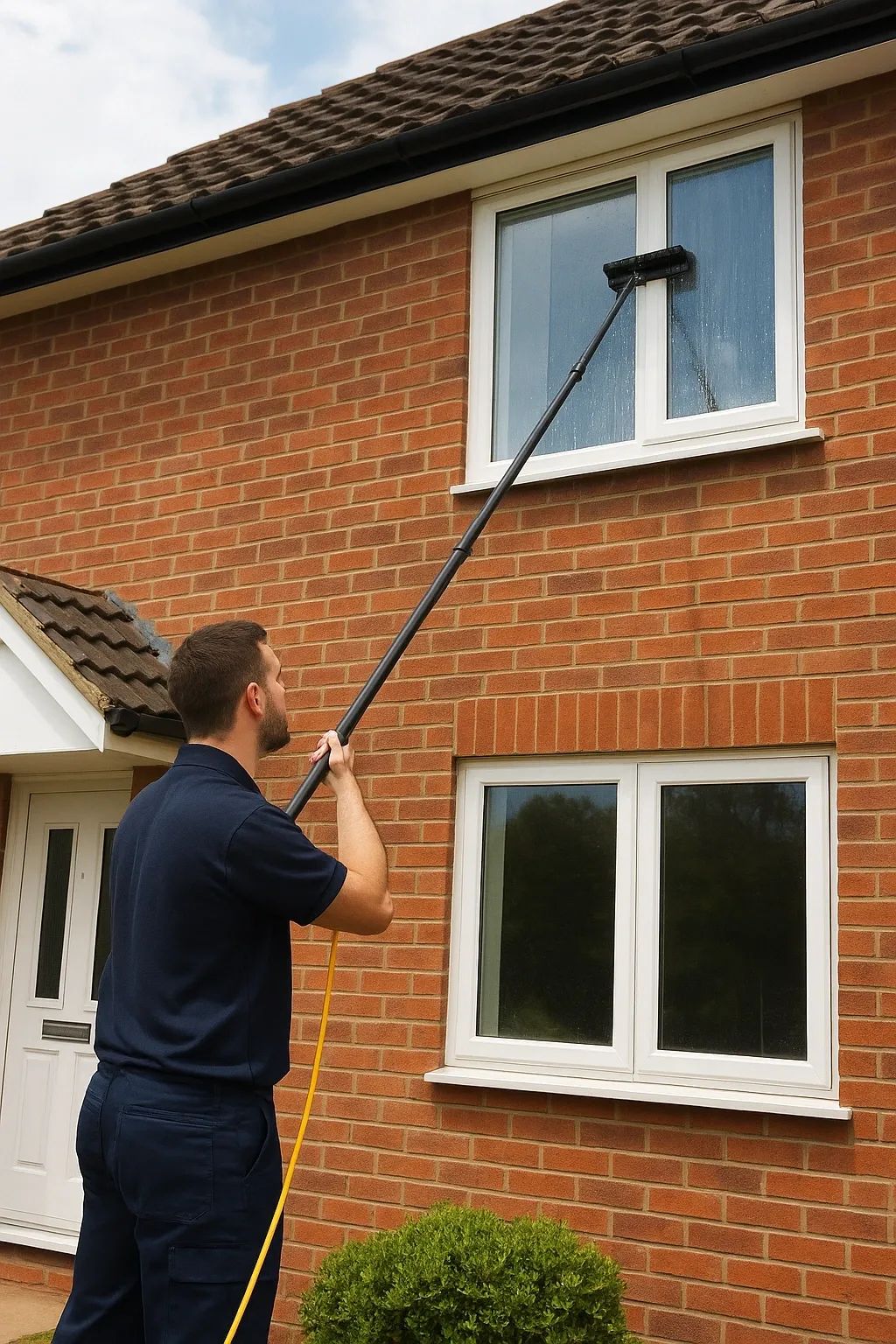
| Window cleaning rounds | A written list of customers on a regular cycle, with addresses, prices and frequencies, often sold without staff | Several times the monthly round value |
| Oven cleaning | Owner-operator businesses and franchise territories with repeat customers on yearly cycles | A year's profit, with the franchisor's consent where there is one |
| Washroom and hygiene services | Service contracts for sanitary bins, air care and consumables, billed monthly on fixed routes | A year's profit, usually at the higher end of the range given the regular billing |
If you are still deciding whether to buy at all, our guide to buying or starting a cleaning business compares the two routes in plain terms.
What to check before buying a cleaning business
- Contracts and notice periods: read every written contract, note how much notice each client can give, and look for change-of-control clauses that let a client leave when the owner changes.
- Client concentration: treat any single client above about 15 to 20% of turnover as a risk to be reflected in the price or covered in the deal.
- Staff and the rota: check pay against the National Living Wage of £12.71 an hour from 1 April 2026, look at how many cleaners left last year, and find out who runs the rota when the owner is away.
- Accounts: compare the filed accounts with bank statements and the client list, and agree which personal costs can fairly be added back to profit.
- Regular work: count weekly and daily cleans apart from one-off deep cleans and builders' cleans, since only the regular work can be relied on next year.
- Accreditations and insurance: confirm any BICSc training, ISO 9001 or 14001 certificates and SafeContractor or CHAS memberships, and whether they sit with the company or the owner personally.
Our guide to buying a cleaning business sets out a fuller due diligence checklist
How cleaning businesses are priced
Small owner-run cleaning companies are usually priced on adjusted profit, which is a year's profit with the owner's own salary, dividends and personal costs added back, and they often sell for roughly 1.5 to 3 times that figure, so a domestic agency making £60,000 of adjusted profit would typically be priced somewhere between £90,000 and £180,000. Larger businesses with a manager in place and profit above roughly £250,000 are priced on profit after paying for a full management team, and fetch more against their profit because the buyer is not buying themselves a job.
Window cleaning rounds are priced on monthly turnover instead, with published rules of thumb of 2 to 5 times the monthly round value according to Cleaning Matters, and 3 to 5 times for most rounds, with compact, well-priced rounds justifying 6 to 9 times, according to Window Cleaning Warehouse.
Wages come straight off profit in this trade, so with the National Living Wage at £12.71 an hour from April 2026 and employer National Insurance at 15% on earnings above £5,000 since April 2025, ask whether the owner has passed those rises on to clients.
Funding the purchase of a cleaning business
Most buyers put in some of their own cash and borrow the rest from a bank, either on ordinary terms secured against property or under the government-backed Growth Guarantee Scheme run through the British Business Bank, where the lender receives a partial government guarantee while the borrower stays fully responsible for repaying the loan. The third source is the seller, who will often agree to take part of the price in instalments over an agreed period after the sale, known as deferred consideration, and this also gives the seller good reason to help keep clients and staff settled through the handover.
Lenders look hardest at contract terms, client concentration and whether profit covers the repayments comfortably, so written contracts and a broad spread of clients make a business far easier to fund.
Cleaning businesses for sale by region
Buyers looking for a cleaning company for sale usually want one within reach of where they live or already work, and the notes below describe what buyers in each part of the UK tend to look for. We add businesses to each region as owners instruct us, so the businesses shown change as new ones come in.
London
Buyers in London tend to look for office and commercial contract cleaners with their sites grouped in one or two boroughs, since travel between sites across the city eats into cleaners' paid time, and they check pay rates closely because some London clients ask for the voluntary London Living Wage.
The South East (Kent, Surrey, Essex)
Buyers across Kent, Surrey and Essex often look for domestic cleaning agencies serving commuter towns and window rounds on compact estates, alongside commercial cleaners covering business parks, schools and surgeries, and many want a business near enough to their existing work to share supervisors and vans.
The South West (Bristol)
Buyers in and around Bristol tend to look for commercial cleaners serving offices and public sector sites in the city, while further out they look for domestic agencies, window rounds and holiday let cleaning in towns and coastal areas, where changeover work can make the turnover more seasonal.
The Midlands (Birmingham)
Buyers around Birmingham and across the Midlands often look for contract cleaners serving offices, industrial units and warehouses with a supervisor already in place, and larger cleaning companies in the region look for businesses whose sites sit close enough to add to their existing rotas.
The North West (Manchester)
Buyers in Greater Manchester and the wider North West tend to look for commercial cleaners with offices, schools and healthcare sites spread across the city's boroughs, and for domestic agencies in the surrounding towns with settled weekly and fortnightly clients.
Yorkshire
Buyers in Yorkshire often look for contract cleaners and window cleaning businesses serving Leeds, Sheffield and the towns around them, and for domestic and carpet cleaning businesses with repeat customers in the market towns and villages.
Scotland
Buyers in Scotland tend to look around Glasgow and Edinburgh for commercial and domestic cleaning businesses, and since Scots law differs from English law on the sale agreement and on property, both sides need a solicitor who practises in Scotland.
If the area you want is not covered yet, register as a buyer with the towns you would consider and we will contact you when a business there comes to us.
How buying through us works
- You register as a buyer and tell us the trade, area and budget you have in mind.
- We send you an anonymous summary of any business that fits, and if you want to go further you agree to our confidentiality terms before we share its name.
- You receive the sales pack, with accounts, a breakdown of clients and contracts, and staff details.
- You meet the owner, ask your questions and, if it suits you, make an offer that we take to the seller.
- Once the main terms are agreed in writing, your accountant and solicitor carry out due diligence while we keep both sides moving.
- Contracts are signed, the money is paid, and the owner hands over clients, staff and systems as agreed.
A typical cleaning business sale takes 6 to 9 months from first valuation to money in the seller's account, though window rounds and small domestic businesses often go through in 2 to 4 months.
Register to hear about new listings first
When a new business comes to us we contact registered buyers directly, often before it is listed anywhere, so if you register as a buyer with your preferred trade, area and budget, we will send you anything that fits. If you already run a cleaning company and want to add contracts or a round near your existing work, tell us that too, because many sellers prefer a buyer who will keep their cleaners in work.
Questions buyers ask
How much does it cost to buy a cleaning business?
Small owner-run cleaning businesses usually sell for roughly 1.5 to 3 times a year's adjusted profit, so a business making £50,000 of adjusted profit would typically be priced between £75,000 and £150,000. Window cleaning rounds cost less to get into and are priced on several times the monthly round value. Each of our listings shows the asking price and the profit figure behind it.
Can I buy a cleaning business with no experience?
Yes, and many buyers of cleaning businesses are first-time owners leaving corporate jobs. The safest choice for a newcomer is a business with a supervisor already running the rota, with the seller staying on for an agreed handover written into the sale contract.
Do the cleaners transfer when I buy the business?
In an asset sale the cleaners move across to you on their existing terms under the TUPE regulations, along with their length of service. In a share sale you buy the company itself, so it remains their employer and TUPE does not apply to the sale. Either way, check employment contracts, pay rates and any open disputes before you agree a price.
Will the clients stay after I buy a cleaning business?
Most clients stay when the same cleaners keep coming and the standard holds, though nothing is guaranteed. Check for change-of-control clauses and notice periods, and in an asset sale expect to need each client's consent before their contract moves to you. Buyers of window rounds commonly expect 5 to 10% of customers to drop off after a sale.
Why are the cleaning business listings anonymous?
Owners do not want staff, clients or competitors to learn the business is for sale before a deal is agreed. Each listing gives the trade, area, turnover and profit, and we share the name once you agree to our confidentiality terms.