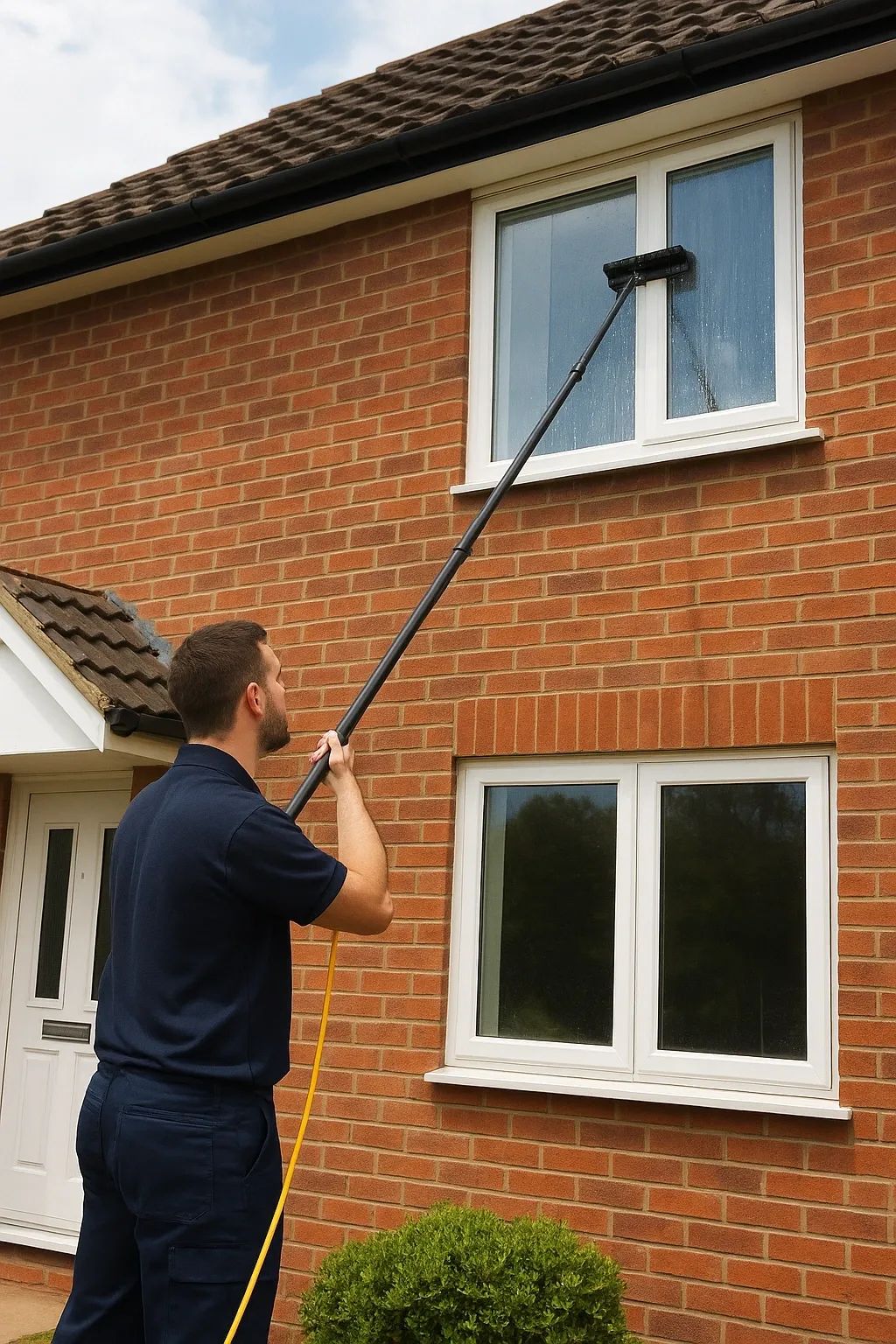
To start a cleaning business in the UK you register with HMRC as a sole trader or set up a limited company, take out public liability insurance and employers' liability insurance once you employ anyone, and set prices that cover the £12.71 National Living Wage plus every other cost before your profit.

Starting costs very little, though building a full diary of regular clients usually takes many months, while buying an existing round or contract book costs more up front and pays you from the first week. Which suits you depends mostly on how much money you have and how long you can wait for a full income.
This table shows the costs that belong in every hourly rate or contract price before you add any profit for yourself.
| Cost | Why it belongs in the price |
|---|---|
| Wages | At least £12.71 an hour from April 2026 for staff aged 21 and over, and your own time should be valued the same way |
| Employer National Insurance | 15% on each employee's earnings above £5,000 a year since April 2025 |
| Holiday pay and pension | Paid holiday and workplace pension contributions add to every hour worked |
| Travel | Time and fuel between jobs, which in domestic cleaning can be a large share of the day |
| Supplies and equipment | Chemicals, cloths, vacuums and their replacement over time |
| Insurance and overheads | Public and employers' liability cover, phone, software, accounting and advertising |
Price commercial work by estimating the hours each visit needs, costing them as above and then adding your profit, and resist winning work by undercutting, because contracts priced too low are hard to raise later and leave nothing spare when wages go up each April.
Start close to home so travel time stays low, set up a free business profile on the main search and map listings and ask every satisfied client for a review, since reviews are what most households check before booking a cleaner. Leaflets through letterboxes on the streets where you already clean, introductions to letting agents for end-of-tenancy work, and direct approaches to small offices, surgeries and shops nearby all work for different trades, and referrals from existing clients become the cheapest source of work once you have a few. Aim for regular weekly or fortnightly clients over one-off cleans wherever you can, because a diary of repeat work is what eventually gives the business a value someone else would pay for.
This table compares starting a cleaning business from nothing with buying an existing window cleaning round or book of cleaning contracts.
| Factor | Starting from scratch | Buying a round or contract book |
|---|---|---|
| Cost to begin | Low: insurance, equipment, supplies and advertising | Higher: a round is often priced at several times its monthly turnover, and an owner-run business at roughly 1.5 to 3 times a year's adjusted profit |
| Time to first income | As soon as you land your first client | From the first week after the sale |
| Time to a full diary | Usually many months of marketing and quoting | Immediate, less some customer losses after the sale |
| Main risk | Not finding enough regular clients quickly enough to live on | Overpaying, or losing clients and staff after the handover |
| What you get | A business built your way, with no history to inherit | Clients, staff, systems, reviews and a track record lenders can see |
| Funding | Usually personal savings | Cash, bank lending and part of the price paid to the seller over time |
Starting from scratch suits someone with little capital, the time to spend months building up clients, and a household that can manage on a lower income while that happens, and it is also a sensible way to learn the trade before buying something bigger later. Buying suits someone who needs a full income quickly, has savings or access to lending, and wants to spend their effort running and growing an existing business from the first day, which is why many first-time owners leaving corporate jobs and existing window cleaners expanding their rounds choose to buy. For window cleaners the sums are easy to see, since a round taking £3,000 a month priced at 3 to 5 times its monthly turnover, a common range according to Window Cleaning Warehouse, would cost between £9,000 and £15,000, while buyers commonly expect 5 to 10% of customers to drop off after a sale according to Cleaning Matters.
If buying appeals, browse window cleaning rounds for sale and cleaning businesses for sale, read our guide to buying a cleaning business, or register as a buyer to hear about new listings first.
A one-person domestic or window cleaning business can start for very little, since the main costs are insurance, equipment, supplies and some advertising. Costs rise once you employ people, because you need payroll, employers' liability insurance and enough cash to pay wages before clients pay you. A vehicle is the largest cost if you do not already have one.
No general licence is needed to run a cleaning business in the UK. You do need to register with HMRC as a sole trader or set up a limited company, and register as an employer before you pay staff. Specialist work such as removing waste may need separate registration.
Employers' liability insurance of at least £5 million is a legal requirement once you employ anyone. Public liability insurance is not required by law, but almost every client will expect you to hold it. Many cleaners also insure their equipment and any client keys they hold.
Starting is far cheaper up front, though it usually takes many months to build a full diary of regular clients. Buying costs more on day one but pays a full income from the first week after the sale. The right choice depends on your savings and how long you can wait for income.
Most people starting alone begin as sole traders because it is simpler and cheaper to run. A limited company keeps business debts apart from your personal finances and can suit you better as profits grow or once you employ staff. An accountant can show you the tax position for your own figures.
Buyers on our register hear about new listings before they are advertised.